Sustainable Aquatic Sciences and Engineering (SA-SE) Lab
Advancing Sustainable Aquatic Health where Research and Innovation meets Extension through Observations and MOdeling

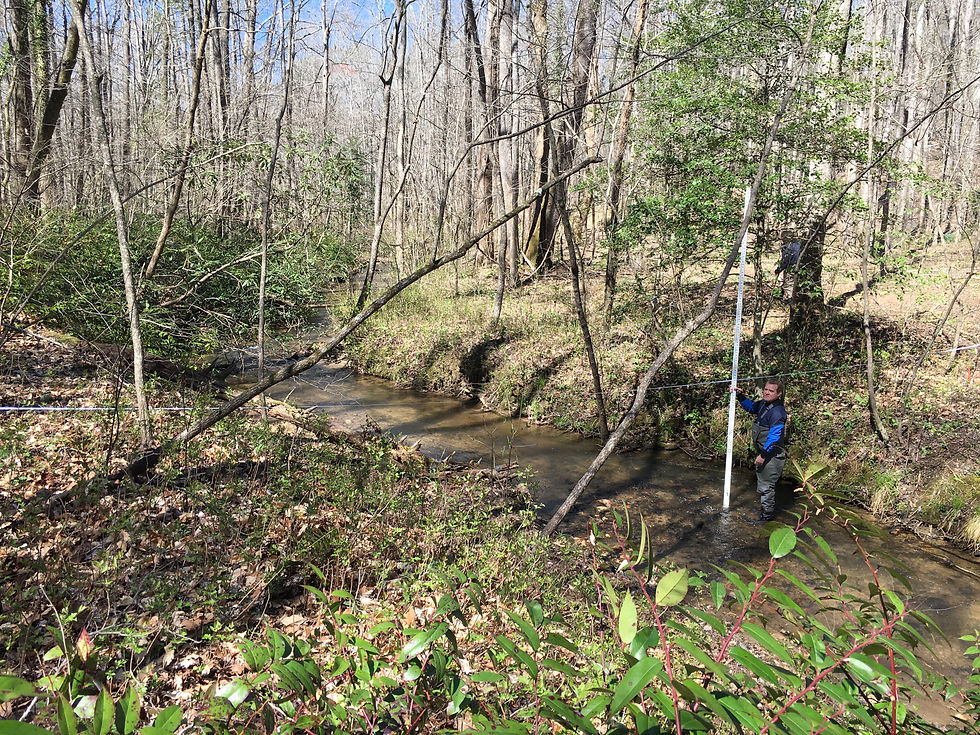

The Sustainable Aquatic Sciences and Engineering (SA-SE) Lab at Clemson University was established in 2020 by Dr. Debabrata (a.k.a. Deb) Sahoo, a professional engineer and a professional hydrologist-water quality, to study and address complex human-induced challenges in aquatic ecosystems across multiple spatial and temporal scales. The lab integrates results from field and laboratory experiments, measurements, observational studies, advanced sensing technologies (including high-frequency in-situ sensors, non-contact sensors, drones, and camera systems), surveys, cutting-edge computational tools and high-performance computing, and simulation models to better understand and address emerging issues in aquatic systems with close collaboration with researchers from the region and across the world.
“Access to clean, safe and quality water is a fundamental right and a necessity for all living beings”. With that in mind, the team advances understanding of aquatic ecological processes influencing water quantity and quality across understudied systems, particularly lower-order streams and ponds due to accessibility, size and hydrological conditions, lakes, urban low-impact development practices, and agricultural systems, and provides practical ecological engineering solutions.
Dr. Sahoo closely works with various stakeholders, including homeowners, regulators, local governments, professionals, farmers and industry partners, who are the central actors in his program. The group believes in “Science and Engineering solutions driven by the People, co-designed with Experts, for the People”. The final solution is the product of an iterative, bottom-up process guided by the inputs of the people involved. Because of Dr. Sahoo’s prior experience in industry and local governments solving society-driven water quality challenges, the team’s professional approach emphasizes collaboration with industry partners, agencies, and communities to translate science into accessible, actionable solutions through active engagement, training, education, Extension, workshops, and field days.
Funding Partners & Collaborators